
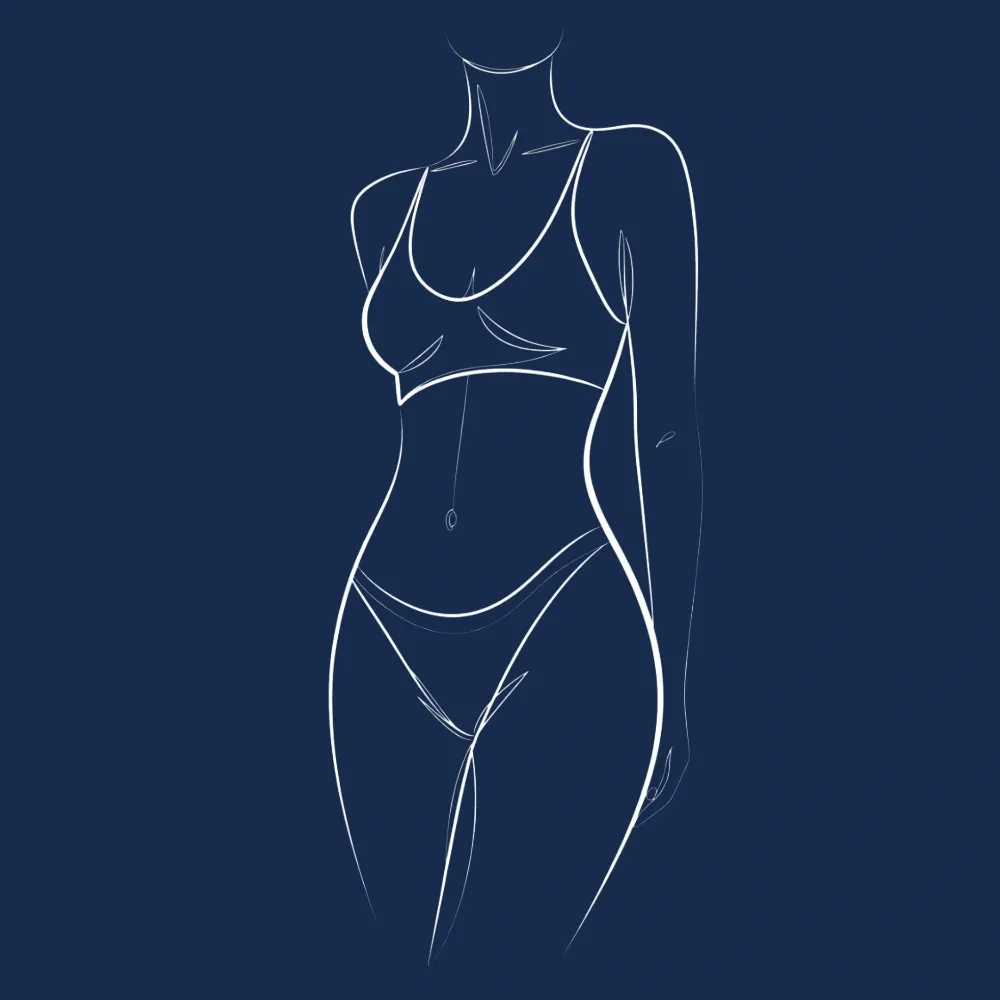
Fat grafting is a procedure that refines body contours using your own fat cells. Weight changes, genetics, aging, or even prior procedures can lead to a lack of volume or definition in certain areas. Fat grafting redefines body contours by transferring fat from one area to another, strategically slimming and volumizing different areas to enhance shape and proportion.
Every patient’s body and goals are unique. Dr. Ryan Constantine works closely with each individual to create a personalized treatment plan that improves the balance of your figure in a natural way. His goal is to achieve subtle, refined results that complement your overall figure and feel authentic to your body.
Who Is a Candidate for Fat Grafting?
Fat grafting may be a good option if you:
- Have areas of the body that lack volume or contour
- Want to improve shape and proportion in specific regions
- Prefer a natural alternative to implants or synthetic fillers
- Have sufficient donor fat available for transfer
- Are in good overall health and have realistic expectations
Ideal candidates understand that fat grafting is designed to refine body contours rather than lose weight or dramatically alter body size.
Benefits of Fat Grafting
Fat grafting offers many benefits:
-
Enhance natural contours: Adds volume to areas that need improved shape or definition
-
Provide natural-looking results: Uses your own tissue for a soft, seamless feel
-
Improve overall balance: Refines proportions across the different areas of the body
-
Offer long-lasting results: Successfully transferred fat becomes a permanent part of the treated area
-
Avoid synthetic materials: No implants, fillers, or foreign substances are used
About the Procedure
Fat grafting is usually performed under general anesthesia. The procedure begins with gentle liposuction to remove fat from donor areas, such as the abdomen, flanks, or thighs. The harvested fat is processed and purified, then carefully injected into targeted areas of the body. The transfer process is performed in small, controlled amounts to ensure smooth and even distribution and to support optimal fat survival. Most patients return home the same day to begin recovery.
Surgical Techniques
Fat grafting involves a precise, multi-step process designed to achieve natural and lasting results:
1. Liposuction: Fat is carefully removed from donor areas using techniques that preserve fat cell viability. The donor areas are also gently sculpted to refine their contours. 2. Fat Processing and Purification: The harvested fat is refined to isolate healthy fat cells for transfer. 3. Fat Grafting: Fat is injected into the target areas in small, strategic layers to promote integration, create smoother contours, and improve proportions.
Dr. Constantine tailors each step to the patient’s anatomy and goals to ensure consistent, natural-looking results.
Recovery and Healing
Here is what most patients can expect for recovery after fat grafting:
-
- First week
- Swelling, bruising, and soreness are common in both donor and treated areas. These can be managed with medication and rest.
-
- One to two weeks
- Most patients return to work and light daily activities.
-
- Four to six weeks
- Swelling continues to resolve, and the treated contours become more refined.
-
- Three months
- Final results become visible as the transferred fat stabilizes and swelling fully resolves.
Dr. Constantine provides detailed post-operative instructions and follow-up care to support optimal healing and long-term results.